
When Dogs Swim, Chemicals Travel: The Hidden Cost of Flea Treatments in the Broads


Summer on the Broads brings a familiar rhythm. Boats glide through the channels. Families gather at moorings. Walkers follow riverside paths. Dogs, very often, come too — on decks, beside pubs, along footpaths, and, when given the chance, straight into the water.
At first glance, a dog’s swim seems harmless. A splash, a shake, a wet tail, and the day carries on. But a new independent review by Matt Shardlow has made clear that the environmental cost of some flea and tick treatments is far greater and more complex than many pet owners realise.
Not about blaming dogs
This is not a story about blaming dogs or the people who love them. It is about products used in good faith, often as part of routine pet care, and the invisible pathways by which their chemicals can reach rivers, lakes and wetlands.
The treatments of concern contain fipronil and imidacloprid. These are potent insecticides designed to kill fleas and ticks. However, when chemicals intended to kill small invertebrates enter freshwater systems, they do not simply lose their toxicity. They seriously harm the aquatic insects that form part of the living foundation of the Broads: mayflies, dragonflies, water beetles and other species that support fish, birds and the wider wetland ecosystem.
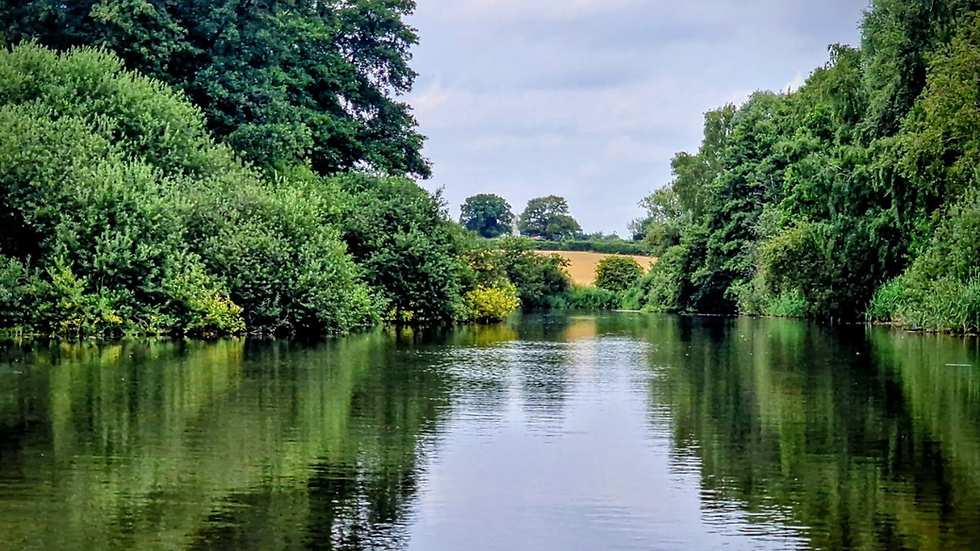
For the Broads, this matters deeply. Water is not just the setting here. It is the system itself. The rivers, dykes, broads and marshes are interconnected, and what enters the water can travel far, killing wildlife as it goes.
More than a dog’s swim
Previous concerns have often focused on dogs swimming after treatment. That remains important. Current government advice says pets should not swim for at least four days after a spot-on flea or tick treatment, and that swimming and washing should be limited in the weeks following application. But Shardlow’s review shows that the issue goes well beyond the moment a dog jumps into the river.
These chemicals can rub off treated animals onto hands, clothing, furniture and pet bedding. When hands are washed, bedding is put in the machine, or pets are bathed at home, residues enter the wastewater system. From there, they pass through sewage treatment works and into rivers. In other words, pollution does not only come from what happens at the water’s edge. It can begin in bathrooms, kitchens, utility rooms and washing machines, then travel unseen from home to river.

That makes this an issue for visitors and residents alike. Summer brings more dogs to the Broads on boats for holidays and days out. But local dog walkers, pet owners and households are part of the picture too. The cumulative effect of everyday, repeated actions can matter just as much as a busy weekend on the water.
The question of flea treatments in the Broads is therefore not only a summer visitor issue, but a wider water-quality concern for everyone who lives in, visits or cares about the area.
Why awareness alone is not enough
The government is now gathering evidence on veterinary medicines containing fipronil and imidacloprid, including whether these products should continue to be sold over the counter, or only prescribed by veterinarians under strict regulations. That review is well overdue. If pollution is entering waterways through wastewater, washing pets, bedding and hands, as well as swimming, a warning on the packet will not be enough. These chemicals need to be controlled by law.
Shardlow’s review also raises broader questions for regulators, water companies and public bodies responsible for protecting rivers and wetlands. If these chemicals are passing through wastewater systems and reaching protected landscapes such as the Broads, the solution cannot rest with pet owners alone. Public awareness matters, but so do regulation, monitoring, wastewater management and clear advice at the point of sale.
There is an important balance to strike. Fleas and ticks are real problems. Pet owners need safe and effective ways to protect animals from discomfort and disease. But the question is whether products with such high environmental risks should be used routinely, widely and without sufficient guidance — particularly in a landscape as water-sensitive as the Broads.

What can pet owners do now?
The first step is simple: check what is in your pet’s flea and tick treatment. If it contains fipronil or imidacloprid, be aware that these substances may have environmental consequences if residues reach water. Other treatments are available.
Do not let recently treated pets swim. Avoid unnecessary washing after treatment. Dispose of used pipettes in the bin rather than rinsing them. Think carefully before washing bedding, especially if the pet was recently treated. Most importantly, ask a vet, pharmacist or suitably qualified medicines supplier whether routine treatment is really necessary and what the lowest-risk option may be for your animal, your household and the environment.
The hidden journeys that matter
The Broads Society has long argued that water quality must be central to the future of this landscape. This issue shows why. Some of the most serious threats to the Broads are not always obvious. They do not arrive as a visible slick or a dramatic spill. They can come through everyday products, ordinary habits and systems that were not designed to account for this level of environmental risk.
The Broads are often loved for what is visible: big skies, reedbeds, boats, birds and open water. But their health also depends on what is harder to notice — the life beneath the surface, the insects in the margins, and the quality of the water itself.
A dog’s swim may last only a few minutes. A load of washing may seem entirely
unremarkable. But the chemicals we use at home do not always remain at home.
This blog is intended as an introduction to a fast-developing issue. The Broads Society will continue to follow the evidence, including Matt Shardlow’s latest work, and will consider how this subject can be explored in greater depth through future articles and campaign activity.
Protecting the Broads means making those hidden journeys visible — and asking whether products designed for convenience have been allowed to exact too high a cost on the natural world.
Reference: Shardlow, M.E.A. (2026) Flea Pollution Treatment Crisis – an Independent Review. Wildlife and Countryside Link, London. 212 pp.
Image Credits
Images courtesy of Visit the Broads and Claire Butler


While reading this on https://casinomuchbetter.com, I couldn't stop thinking about how we often ignore the unseen risks in everyday choices—the way flea treatments can end up in rivers through laundry runoff is a perfect case. I'd never considered that washing pet bedding could be part of the problem, and it makes me wonder how many other household routines are quietly affecting the Broads.