
What is a river for? The competing demands shaping the future of the Broads

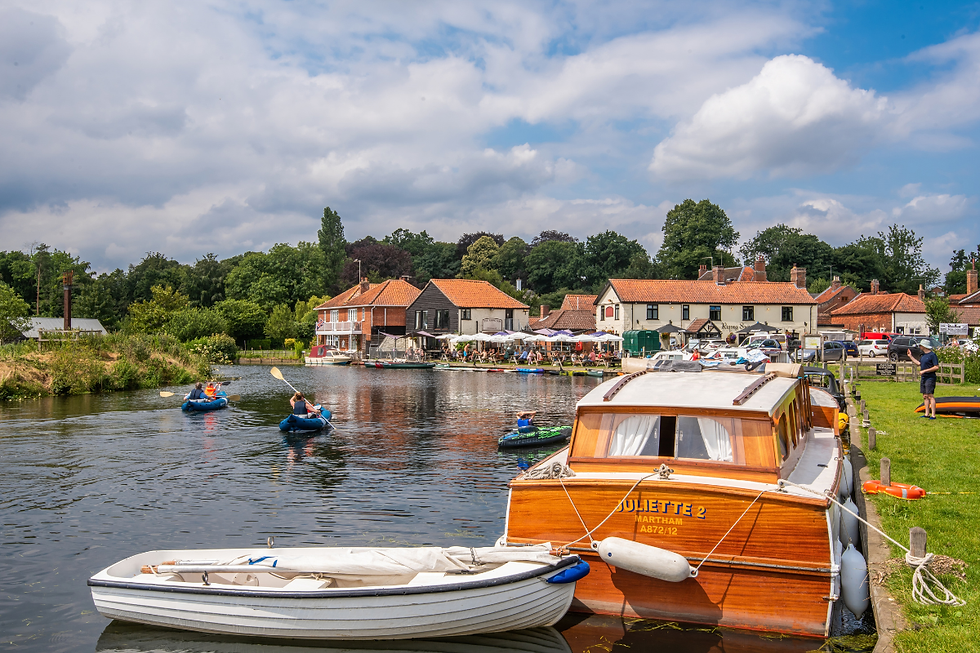
Stand beside almost any river in the Broads for long enough and you begin to see just how many answers there are to one apparently simple question.
What is a river for?
A sailing boat tacks slowly towards you. A cruiser passes in the opposite direction. Somewhere along the bank, an angler has been sitting quietly since first light. Beyond the floodbank, cattle graze on marshes threaded with dykes. Reeds move at the water's edge and, unseen below the surface, fish, aquatic plants and invertebrates occupy another world entirely.
Everyone may be looking at the same river. But we are not necessarily asking the same thing of it.
World Rivers Day, marked each year on the fourth Sunday in September, gives people around the world an opportunity to celebrate their rivers and consider the challenges they face. Here in the Broads, it prompts a particularly interesting question.
Because the rivers of the Broads are not simply attractive waterways winding through a protected landscape. They are navigation routes, habitats, workplaces, recreational spaces, drainage arteries and pieces of living history.
And increasingly, they are places where some of the most difficult questions about the future of the Broads meet.
A landscape made by water — and people
It is tempting to think of the Broads as an essentially natural landscape upon which people have subsequently made their mark.
Its history is rather more interesting.
The broads themselves are largely the flooded remains of medieval peat diggings. The rivers became vital transport routes, connecting settlements and carrying people and goods long before roads could do so with anything approaching today's ease.
Wherries carried cargo. Reed and sedge were cut from the wetlands. Marshes were drained and grazed. Mills and later pumps moved water from low-lying land. Riverbanks were altered, channels maintained and communities developed in close relationship with the waterways.

Today, the Broads still has around 200 kilometres of lock-free tidal navigation.
So when we talk about looking after its rivers, what exactly are we trying to protect?
A natural ecosystem? A historic navigation? A working landscape? Somewhere for people to enjoy?
The answer is all of them.
One river, many demands
For someone at the helm of a boat, a river needs to be safely navigable. Depth, vegetation, moorings, bridges and tides all matter.
For wildlife, the requirements may look rather different. Aquatic plants need suitable conditions. Fish need food, refuge and places to breed. Birds and mammals depend upon healthy river margins and the wider network of connected habitats.
For farmers and land managers in some of the lowest parts of Broadland, rivers, dykes, drainage channels and pumps are inseparable from managing the surrounding land.
For communities beside the water, rivers are part of everyday life.
And for those who sail, cruise, paddle, row, fish, walk or simply sit beside them, they are also places of pleasure, freedom and memory.
These interests are not automatically incompatible. But neither will they always fit neatly together.
Choices about dredging, vegetation, water levels, bank management, navigation and habitat can involve balancing several legitimate needs.
That is where our simple question becomes considerably harder.
What we cannot see
Perhaps one of the greatest challenges is judging the health of a river simply by how it looks.
A Broadland river on a beautiful September morning can appear timeless. Sunlight catches the water, reeds edge the bank and perhaps a kingfisher flashes past.
But some of the most important changes are happening below the surface.
Historically, many of the Broads ssupported clearer water supporting abundant aquatic plants. Today, water quality is affected by a complex mixture of pressures, including excess nutrients entering the system from agriculture and wastewater.
There have been significant efforts to reverse that decline, and there have been successes. But the Broads Authority says clear water now occurs in only around five of the 63 broads.
Then there is the question of how much water is available. Eastern England is a particularly water-stressed part of the country, with homes, businesses, agriculture and the natural environment all making demands upon the same wider resource.
At the other end of the system lies the sea.
The rivers of the Broads are tidal, and salt water can travel inland from the North Sea. Significant saline incursions can have serious consequences for freshwater wildlife, while sea-level rise, drought and reduced summer rainfall add another dimension to the challenge.
What happens to a river, in other words, is rarely just about the stretch of water in front of us.
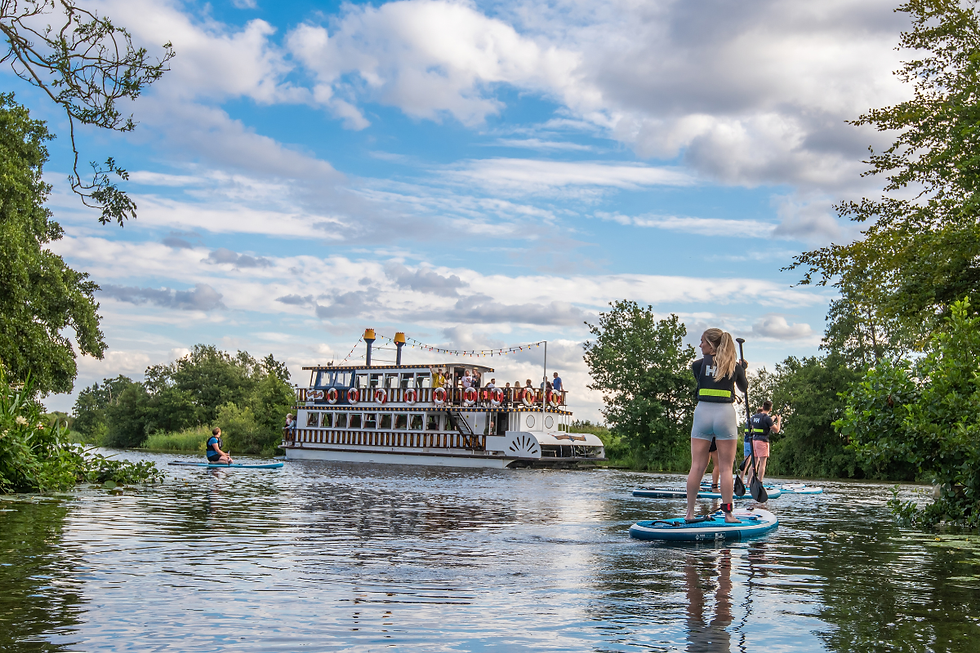
Rain falling on farmland, gardens, roads and rooftops eventually finds its way into ditches, streams, groundwater and rivers. Nutrients and sediment travel. Fish move. Tides push salt inland.
The waterways connect the landscape — and us — whether we think about that connection or not.
So, what is a river for?
Perhaps the problem with the question is the assumption that a Broadland river needs a single purpose.
It is a wildlife corridor and a navigation.
It is part of a drainage system and part of an internationally important wetland.
It is somewhere to work and somewhere to escape work.
It carries the marks of centuries of human intervention while supporting wildlife that depends upon functioning natural processes.
That complexity is part of what makes the Broads extraordinary. It also makes decisions about its future difficult.
There will be times when interests differ and when difficult choices have to be made. As an independent charity dedicated to protecting and understanding the Broads, the Broads Society has an important role to play in recognising that complexity — listening to different perspectives, asking difficult questions and championing the long-term interests of this extraordinary landscape.
But there is considerable common ground too. Whatever our particular connection to the Broads, there is a shared interest in healthy waterways, thriving wildlife, accessible navigation and communities able to live and work successfully alongside them.
World Rivers Day is a reminder to look at our rivers a little more closely — not simply as beautiful scenery, but as living, working systems on which an extraordinary number of things depend.
The future of the Broads will depend, to a considerable extent, on the future of its water.
So perhaps the question is not simply what is a river for?
It is what do we need our rivers to be for the generations that follow us?
Image credits: Visit the Broads


Comments